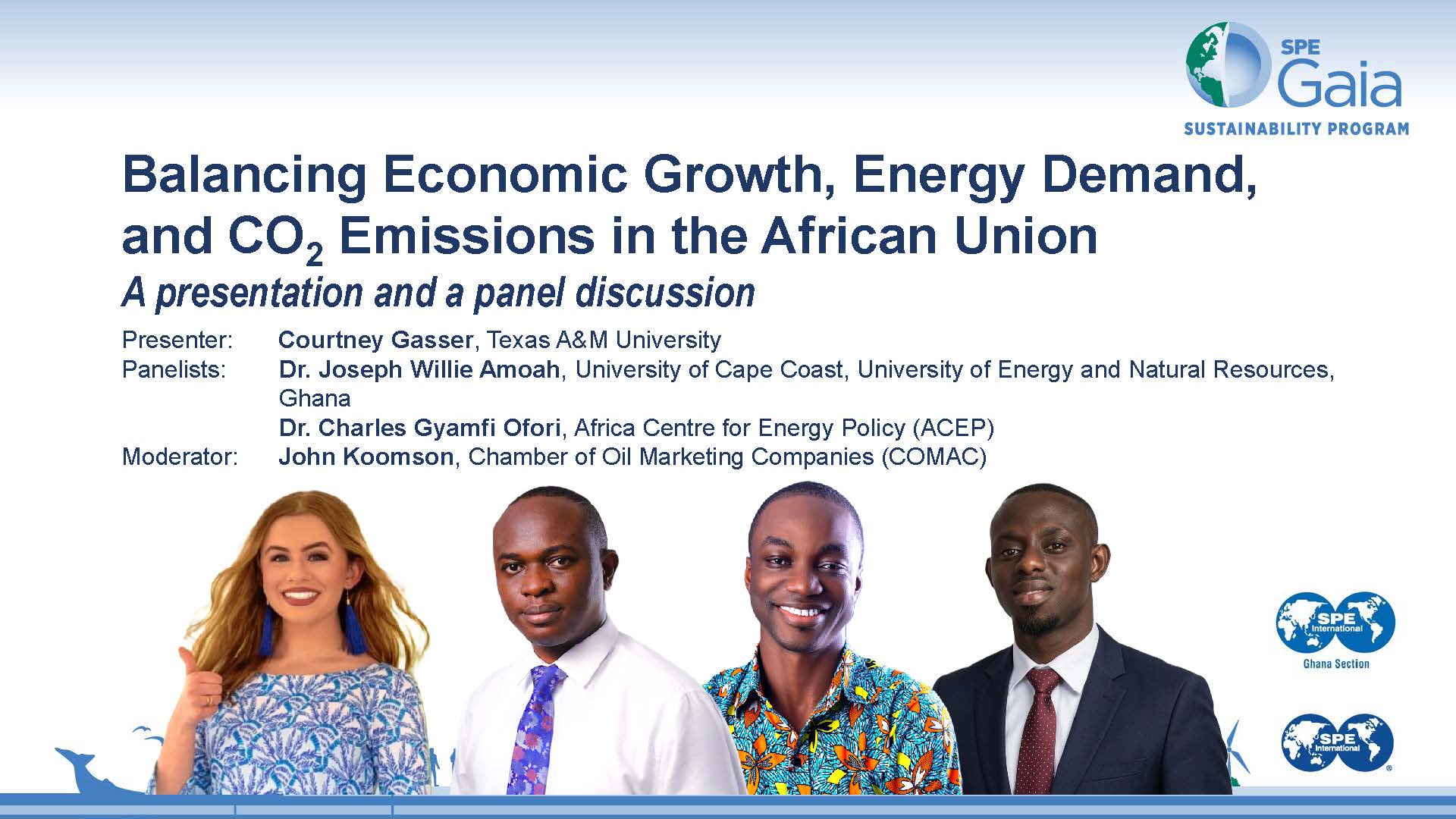
SPE Ghana Gaia Talk: Balancing Economic Growth, Energy Demand, and CO2 Emissions in the African Union
Speakers: Courtney Gasser, Texas A&M University; Dr. Joseph Willie Amoah, University of Cape Coast and University Energy and Natural Resources, Ghana; Dr. Charles Gyamfi Ofori, Africa Centre for Energy Policy
Moderator: John Koomson, Chamber of Oil Marketing Companies
Abstract:
Africa faces a defining energy challenge: meeting rapidly growing demand for reliable and affordable energy while supporting economic development and responding to global climate commitments. With low per-capita energy consumption and continued reliance on traditional biomass across much of the continent, the pathway forward cannot be reduced to a simple choice between development and decarbonization.
This webinar presents a quantitative framework based on the Kaya Identity, which separates CO₂ emissions into population, economic output per capita, energy intensity, and carbon intensity. Using historical data and projections through 2060, the analysis compares business-as-usual and Paris-aligned scenarios for the African Union and examines country-level pathways for Algeria, Egypt, Ethiopia, Nigeria, and South Africa.
The findings indicate that efficiency improvements alone will not be sufficient. Progress will depend on reducing carbon intensity through carefully sequenced fuel substitution, replacement of traditional biomass and coal, responsible use of natural gas where appropriate, and expanded deployment of hydropower, geothermal, solar, wind, and other low-carbon technologies. Following Courtney Gasser’s presentation, a panel of Ghanaian energy experts will discuss how these findings relate to national and regional energy-policy priorities.
=========================================
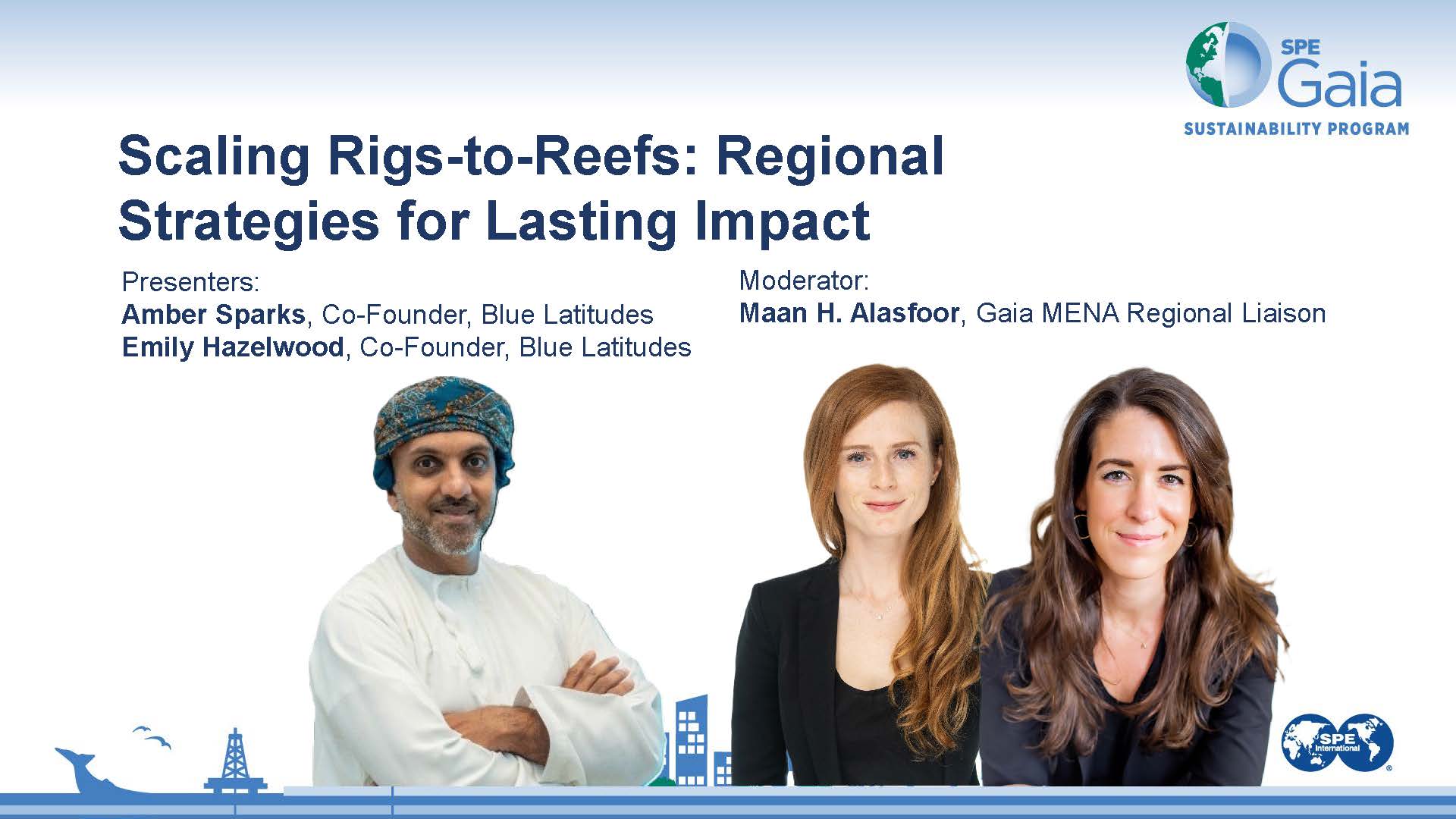
MENA Gaia Talk: Scaling Rigs-to-Reefs: Regional Strategies for Lasting Impact
Speakers: Amber Sparks, Emily Hazelwood, Blue Latitudes
Moderator: Maan H. Alasfoor, PDO
Abstract: Globally, a new wave of offshore decommissioning is underway, bringing both challenges and opportunities for operators and resource managers. Over decades of operation, many offshore oil and gas platforms have evolved into vibrant, productive marine ecosystems. These ecosystems present a compelling opportunity, rather than completely removing the whole platform, they could be left in place through a Rigs to Reefs conversion.
This talk introduces a practical, region-specific framework for evaluating and implementing Rigs-to-Reefs programs. Drawing on lessons learned from established efforts in the Gulf of Mexico and Southeast Asia, as well as from emerging regions such as West Africa, the North Sea, Australia, and California, this talk will highlight the ecological, regulatory, and economic factors that shape success.
=========================================
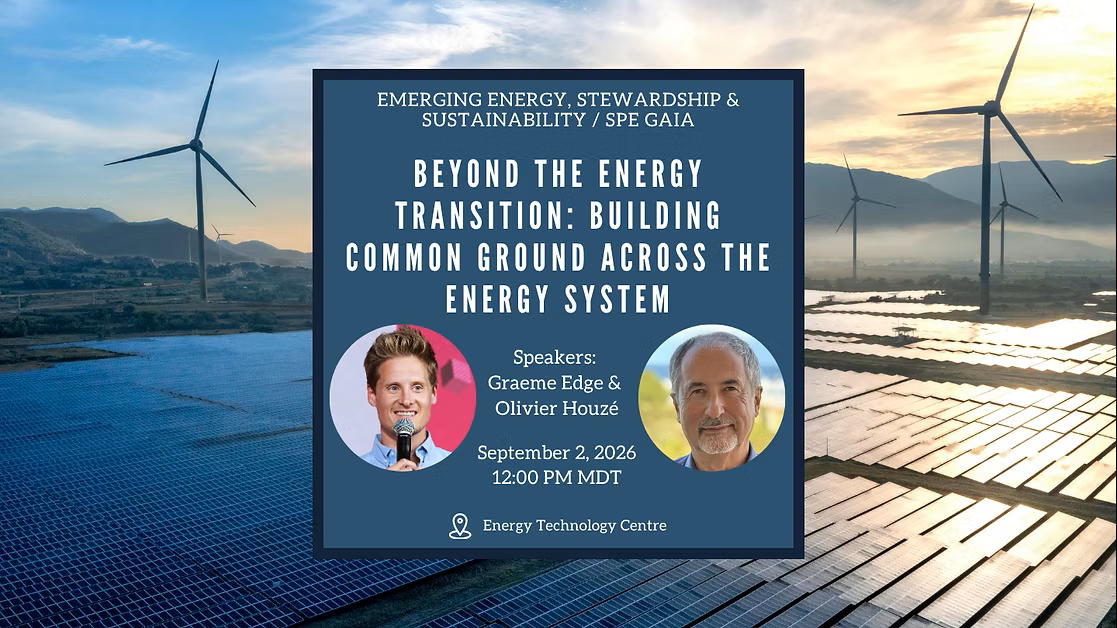
SPE Calgary Gaia Talk: Beyond the Energy Transition: Building Common Ground Across the Energy System
Speakers: Graeme Edge, Energy Disruptors; Olivier Houze, Kappa Engineering
Moderator: Dan Burt, ConocoPhilips
Abstract: For much of the past decade, the energy transition has been framed through competing narratives: oil and gas versus renewables, affordability versus sustainability, energy security versus decarbonization, and established industries versus emerging technologies. These divisions have often encouraged participants to defend positions rather than collaborate on the practical challenge of delivering reliable, affordable, and progressively lower-carbon energy to a growing global population.