Wärtsilä Gas Solutions and Höegh Evi have announced the successful development of the world’s first floating ammonia cracker for hydrogen production. This innovative marine energy solution marks a critical milestone in the global energy transition, enabling floating import terminals to convert ammonia into industrial-scale hydrogen.
The project, launched in April 2023, is part of Norway’s Green Platform program and received approximately €5.9 million in public funding, covering nearly 50% of its total budget. The cracker was built at the Norwegian Sustainable Energy Catapult Center in Stord, with support from partners such as the Institute for Energy Technology (IFE), the University of South-Eastern Norway, BASF SE, and Innovation Norway.
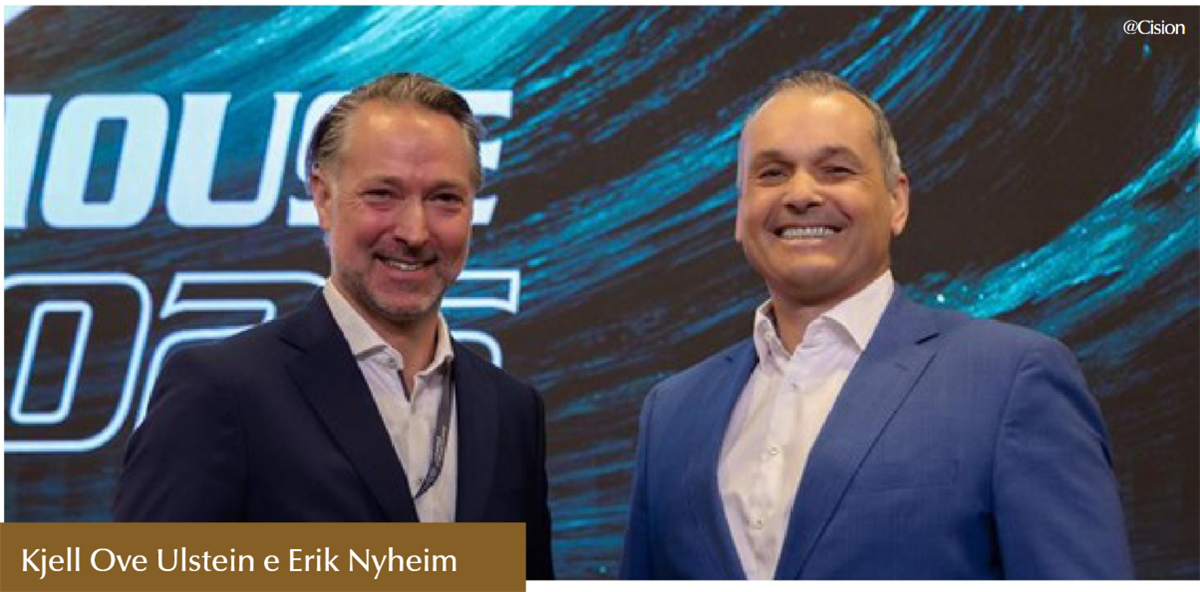
According to Kjell Ove Ulstein, Sales & Marketing Director at Wärtsilä, this development not only addresses the logistics of hydrogen storage and transport but also paves the way for a more resilient and flexible energy infrastructure. Unlike hydrogen, ammonia can be safely stored as a liquid under moderate pressure and temperature, and shipped over long distances. At the destination, the floating cracker reconverts the ammonia into hydrogen for local energy distribution.
The technology is highly scalable, with the capacity to produce up to 210,000 tons of hydrogen per year. Ammonia storage can range from 10,000 m³ to 120,000 m³, and the system integrates with Floating Storage and Regasification Units (FSRUs) or dedicated Hydrogen Floating Terminals.
“The future of energy must be green, and it's our responsibility to be part of the technological development that enables it. We are very proud of this project,”
said Håkon Haugli, CEO of Innovation Norway.
Innovation Norway, the national trade promotion agency, was partially responsible for allocating funds through the Green Platform program.
This innovation aligns with the European Union’s REPowerEU strategy, which aims to import 10 million tons of renewable hydrogen per year by 2030. As the hydrogen infrastructure grows, floating systems with ammonia cracking capability could unlock large-scale hydrogen imports, offering industries a stable and clean base-load energy source.
Hydrogen is emerging as a viable clean fuel in the shift away from fossil fuels. It can be produced at relatively low costs in regions with strong renewable energy access. However, due to its low volumetric energy density and high boil-off losses, hydrogen is difficult to store and transport over long distances.
Ammonia, on the other hand, is far more suitable for this purpose. It can be handled as a liquid and, once delivered, reconverted into hydrogen via the floating cracker for use in power grids or industrial applications.